How to become a digital nomad comes down to a few things done in order: work out the income you need, choose one way to earn it online, keep your current job while you build, sort your admin and kit, and test the lifestyle on a short, structured stay before you commit to months abroad.
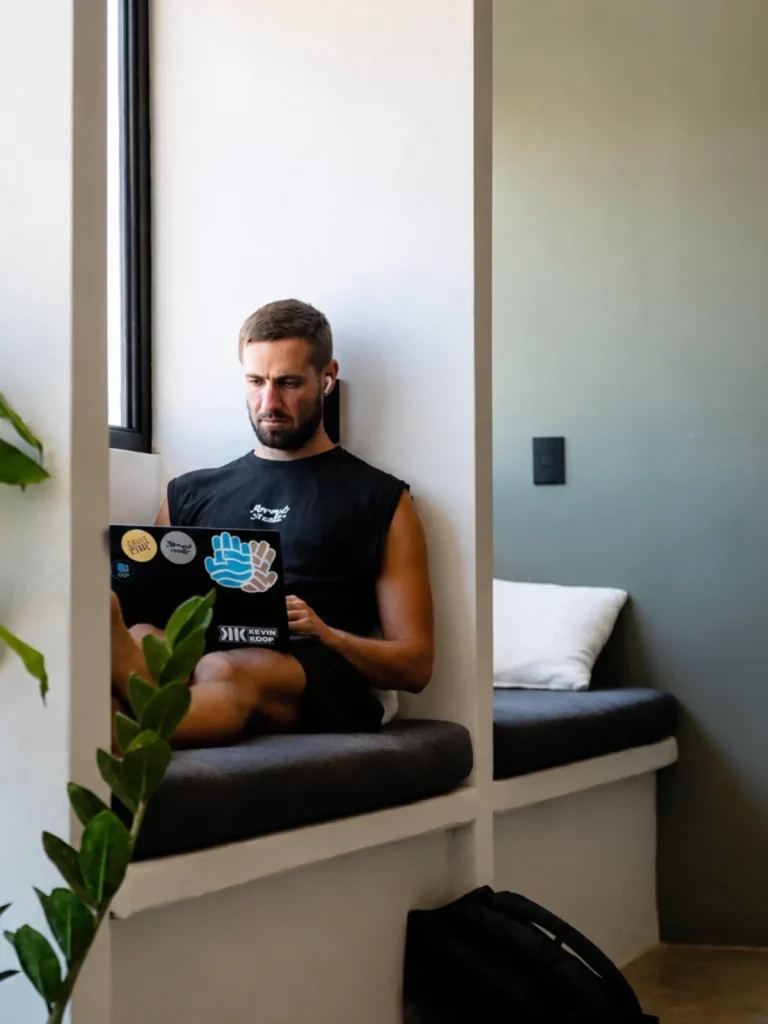
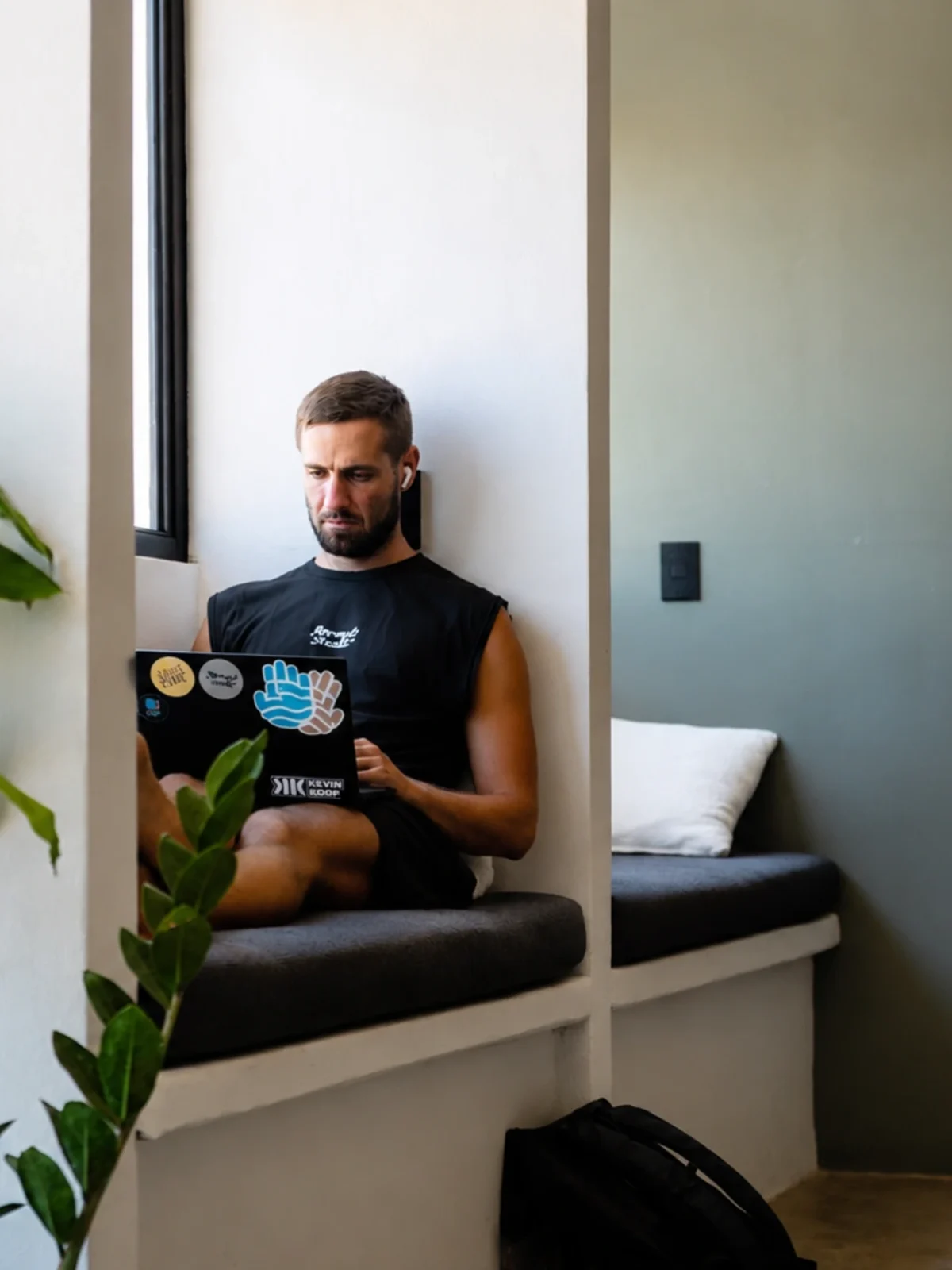
The photos show a laptop on a beach. The reality looks more like a normal workweek in a new place: calls, deadlines, laundry, and working out where to buy groceries. It can be a great way to live. It’s also much easier when you build it step by step instead of jumping all at once.
This guide is for beginners who are curious but careful. It follows the same order we use in our 7-day How to Become a Digital Nomad retreat in Popoyo, Nicaragua, so you can do the first steps at home and the last one with us.
How to become a digital nomad in 8 steps
- Work out your Freedom Number.
- Choose one way to earn online.
- Test remote work at home first.
- Sort the admin: insurance, banking, taxes and visas.
- Set up your work kit.
- Choose your first base.
- Keep your job until the numbers say otherwise.
- Test the lifestyle on a guided week.
Step 1
Work out your Freedom Number
Before you look at destinations or job boards, you need one number: how much you have to earn each month for this life to work. We call it your Freedom Number. It’s your current take-home pay plus the extras you’ll cover yourself once you’re self-employed or abroad: health insurance, a workspace, flights between bases, taxes you still owe at home, and a line for fun, because you’ll spend it anyway.
Next to it, write your Break-even: the essential costs you can’t skip, plus those same extras. The gap between the two numbers is your room to breathe.
Then build a savings buffer you don’t touch. It covers the flight home, a dead laptop or a slow month of income. A common rule of thumb is a few months of expenses, and more if your income is new or irregular. Price your first month in detail for the place you actually plan to go, not an average you read online.
Step 2
Choose one way to earn online
Everything else depends on income that doesn’t care where you are. There are more ways to earn online than most beginners realise, and they fall into three groups.
Sell your skills
A remote job, freelancing or virtual assistance. You’re paid for work you already know how to do. The fastest route to income, and the one most beginners start with.
Teach and create
Online teaching, coaching and consulting, content and UGC. You’re paid for what you know and how you explain it. Slower to start, but it grows with your audience.
Build assets
Blogging and affiliate sites, digital products, e-commerce, AI and automation services, remote sales. Takes the longest to replace a salary, but keeps earning when you’re not at the desk.
The mistake is trying three at once. Pick one avenue, build proof you can deliver it (a small portfolio, a few practice projects, one or two references), and land your first paid work while you still have your current income. You can widen out later.
Already working remotely? Ask your employer one clear question: can I work from another country, and for how long? Get the answer in writing before you book anything.
Step 3
Test remote work at home first
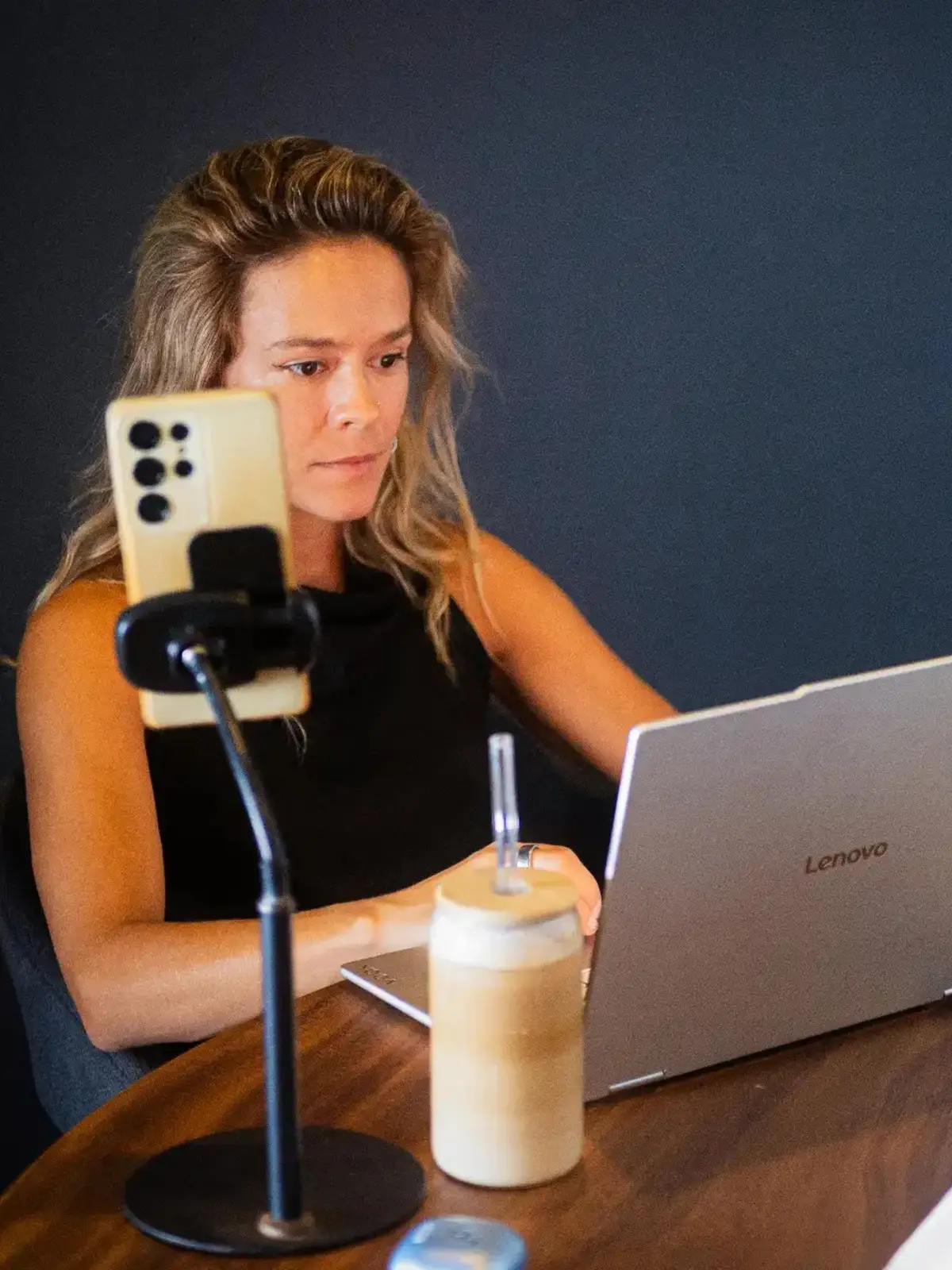
Working remotely from your own city is the cheapest trial you’ll ever run. Give it a real week and check these five things:
- Work somewhere new. A café, a library or a friend’s kitchen table, not your usual desk.
- Shift your hours. Work as if you were three or four time zones away and see how meetings fit.
- Run calls on a hotspot. Use your phone’s data for a day to see if your work survives a weak connection.
- Track your real hours. Without an office around you, do you work more, less or just differently?
- Notice what you miss. Colleagues, structure, a quiet room. Those are the things to plan for abroad.
If the week goes well, you have proof. If it doesn’t, you learned something without spending a cent on flights.
Step 4
Sort the admin before you go
Admin is the least exciting step and the one that causes the most trouble when it’s skipped. Cover these four areas before you leave.
Insurance
Travel insurance and health insurance are not the same thing. Travel insurance usually covers emergencies, evacuation, cancellations and lost bags. Health insurance covers routine care. Read the policy for remote work abroad, long stays and sports you plan to do, like surfing.
Banking and your phone
Carry two cards from different banks, kept in different places, and check their foreign transaction fees. Keep access to a phone number that receives your security codes. Losing that number can lock you out of your bank, your email and your work tools at the worst moment.
Taxes
Moving around doesn’t automatically end your tax obligations at home. The rules depend on your citizenship, your residency and where your income comes from. Talk to a tax professional who works with remote workers before you leave, not after your first year abroad.
Visas
Visa rules depend on your passport and your destination, and they change often. Some countries offer specific remote work visas. Others don’t allow any work on a tourist entry. Check the destination’s official government site or embassy. US citizens can start with the State Department’s country information pages. Forum posts are not a source.
Step 5
Set up your work kit
Your kit is your office. Keep it small, but don’t cut corners on the pieces that keep you online.
| Item | Why it matters |
|---|---|
| A reliable laptop, backed up | Keep your files in the cloud and on an external drive |
| Backup internet | A local SIM or eSIM with data you can hotspot when the wifi drops |
| Headset with a microphone | Clear calls, even in shared spaces |
| VPN | A safer connection on public networks and access to your usual tools |
| Universal adapter and power bank | Outlets differ, and you don’t want a call to end at 3% battery |
| Password manager with backup codes | A lost phone shouldn’t lock you out of everything |

Where you work matters as much as what you carry. A dedicated workspace with backup power and private call rooms removes most daily worries. Our coworking space in Popoyo runs on fibre with a backup generator and four private call rooms for exactly that reason.
Step 6
Choose your first base
For your first trip, pick one place and stay a while. Moving every few days burns time, money and focus. Score each option you’re considering on these criteria:
| Criteria | What to check |
|---|---|
| Internet | Recent reports from remote workers, not just a listing photo |
| Time zone | How many working hours overlap with your team or clients |
| Community | Coworking spaces, coliving, events, other remote workers nearby |
| Routine | Can you reach food, exercise and a workspace easily every day? |
| Cost | Your Freedom Number from step 1, priced for this specific place |
| Arrival | Flight connections, airport transfer and your first night sorted |
A place that scores well on internet, time zone and community will carry you through the rough first weeks. Our guide to the best digital nomad destinations compares popular bases. If Central America is on your list, Popoyo for Digital Nomads covers internet, costs and daily life on Nicaragua’s Pacific coast.
Step 7
Keep your job until the numbers say otherwise
This is the rule we put on the first page of our retreat booklet, and we call it the Esc Golden Rule: nobody quits their job because of a retreat, a blog post or a good week on the beach. You keep your current income until your new income beats your Freedom Number for three months in a row.
Three simple tests tell you when it’s safe to make the jump:
- Three months above your Freedom Number from the new income alone.
- Three months of Break-even saved and untouched.
- More than one source of income, so one lost client doesn’t end the trip.
Until then, you build in the evenings, on weekends and on the remote-friendly weeks your employer agrees to. It’s slower. It’s also how most people who are still nomads three years later actually did it.
Step 8
Test the lifestyle on a guided week
Even with every step above in place, one question is left: do you actually like this life, and which avenue is really yours? A short, structured stay answers both with far less risk than a six-month lease abroad. You get fixed dates, a workspace ready on day one, meals and your airport transfer handled, other beginners around you, and someone whose job is to walk you through the decisions.

How the 7-day retreat works at Esc
Our How to Become a Digital Nomad: 7-Day Retreat runs at Esc – Digital Nomad Village in Popoyo, Nicaragua, with Greg Miceli. Over seven days you work out your Freedom Number, see every main way to earn online with a hands-on lab each day, test-drive your top two, and leave on day seven with one chosen avenue, a recommended course and a 90-day plan. Mornings start with yoga or the gym, there’s a free group beginner surf lesson on day two, and evenings are dinners, fireside chats with working nomads and an alumni panel.
Want to build the avenue, not just choose it? Stay on for the 30-Day Digital Nomad Bootcamp: the same first week, then three weeks in the village building and launching your offer, with a one-hour session with your teacher each week and a Friday review. Dates and prices are with reception on +505 5503 1484.
Use the week as a real test. Watch your energy and focus by day three or four. Notice whether you enjoy the people and the pace. Write down what you’d change for a longer stay. Then go home, keep your job, and work the 90-day plan.
Already working remotely?
If your income is already location-independent and you just want to try the coast, you don’t need the retreat. Our all-inclusive coworking packages cover your room, three meals a day, airport transfer and workspace for one week, two weeks or a month, from $550 per person. You arrive, work your normal hours, and the rest is arranged.

Your next step
You don’t have to quit everything to find out if this life suits you. Work out your Freedom Number, pick one avenue, test remote work at home, sort the admin and pack the right kit. Keep your job. Then spend one guided week deciding properly before you commit to months.
Spend a week deciding properly
Seven days in Popoyo to find your avenue and leave with a 90-day plan, or thirty days to build it. Room, meals, airport transfer and workspace included.
Frequently asked questions
Do you need a remote job before you leave?
You need reliable remote income, yes. Leaving first and searching for work abroad is the riskiest way to start: your savings shrink while you look, often from a new time zone. Secure a remote role, a few steady freelance clients or working business income first, and keep it running for a few months before you go.
How much savings do you need to start?
There’s no single number, because it depends on where you go and how you live. A common rule of thumb is a buffer of three to six months of expenses, priced for your destination, plus the cost of a flight home. The steadier and more proven your income, the smaller that buffer can be.
Which skills or jobs work best for beginners?
Skills you can deliver online and show in a portfolio. Common starting points are writing and editing, graphic design, social media, customer support, virtual assistance, bookkeeping, tutoring and web development. Pick one, build a few samples and land paid work while you still have your current income. You can widen your skills later.
Do I have to quit my job to become a digital nomad?
No, and you shouldn’t at the start. Keep your current income until your new online income beats your Freedom Number for three months in a row, you have three months of essential costs saved, and you have more than one income source. Until then, build in the evenings, on weekends and on remote-friendly weeks your employer agrees to.
What’s the difference between the 7-day retreat and the 30-day bootcamp?
The 7-day retreat is for deciding: you work out your numbers, see every main way to earn online, test two, and leave with one chosen avenue and a 90-day plan. The 30-day bootcamp is the same first week followed by three weeks in Popoyo building and launching that avenue, with weekly sessions with your teacher. Choose the week if you want clarity; choose the month if you want to come home with a working offer.