Popoyo does not announce itself. There is no airport, no main square, and no tourist strip to orient you on arrival. What you get instead is a stretch of Pacific coastline with some of the most consistent surf in Central America, a small and self-selecting foreign community, and, increasingly, the infrastructure to work remotely without giving up the lifestyle that brought you here.
This guide covers everything a digital nomad needs to make a real decision about Popoyo: where to set up, what to budget, how the internet actually holds up depending on where you are, what a productive day looks like, and where ESC Digital Nomad Village fits into the picture.
What Popoyo Actually Is (and What It Isn’t)
Popoyo is not a town. It is a loose cluster of small communities spread along and back from a stretch of Pacific coastline in the Tola region of Nicaragua’s Rivas department. Most of what passes for infrastructure here grew organically around the surf scene over the past decade and a half. The result is a place that is genuinely functional for the right kind of visitor, and genuinely not set up for the wrong kind.
What Popoyo has, and what similarly remote destinations rarely combine, is world-class surf, a low cost of living, a stable foreign community, and now serious coworking infrastructure. The area is still early enough in its development that it has not been reshaped around the nomad economy. The people who come here tend to be self-directed and deliberate about it.
What it is not: a soft landing. If you arrive expecting the setup density of Bali or the social infrastructure of a large nomad hub, the first week will be disorienting. The nomads who stay, and the ones who come back, are the ones who prepared for that trade-off and decided it was worthwhile.
The Surf, the Climate, and the Daily Rhythm
Understanding Popoyo as a remote work base starts with understanding its relationship to the ocean. The surf drives the daily schedule here in a way it simply does not in most nomad destinations. That is not a drawback: it is the structure.
The Breaks
Several distinct surf spots sit within easy reach of each other along this stretch of coast.
- Playa Popoyo: a reef break that delivers power and shape when conditions align. Suited to intermediate and advanced surfers. The wave that put the area on the surf map.
- Playa Guasacate: a more forgiving beach break that works across a wider range of swell and skill levels. The more accessible daily option for most people.
- Beginner Bay: sheltered and consistent, used for lessons and for surfers still building their base.
- La Lejana: a less-crowded alternative for those who prefer to explore slightly further.
The Seasons
Popoyo surfs year-round, but the character of the ocean shifts significantly between the two seasons.
The dry season runs from November to April. Conditions are sunnier, winds are stronger and more consistent, and offshore mornings clean up the surf into something particularly good for experienced surfers. Swells are smaller and more predictable. This period brings the highest concentration of visitors and the most active social scene.
The rainy season runs from May to October. Afternoon showers are common but rarely sustained. Swells grow larger and more powerful during this period, and the landscape turns visibly greener and lusher. Crowds thin out and the pace of the area slows considerably. For nomads who prefer a quieter environment and better waves, this season is underrated.
A Typical Working Day
The nomads who settle into Popoyo for a month tend to land on a version of the same rhythm. An early session in the water or a yoga class before the heat builds. A few focused hours of work through the mid-morning, when the air is coolest and distractions are fewest. A light lunch. Another productive stretch through the early afternoon. Then back to the beach, the pool, or the surf in time for the evening session before dinner.
The midday heat discourages being outside and naturally concentrates the working hours. The late afternoon light discourages being inside. The result is a daily structure that most people do not engineer deliberately but fall into within a few days.

Where to Set Up in Popoyo
The Popoyo area is not a single location. Three distinct zones make up most of what nomads and expats refer to when they talk about living there. Each has a different feel, a different cost profile, and a different level of remote work infrastructure.
Playa Guasacate
Guasacate is the most established area for foreign visitors. The restaurants and cafes are concentrated here, the beach break is accessible, and the social scene is the most active of the three zones. For a first trip or a short stay, it is the easiest entry point into the area.
The trade-off: Guasacate is the busiest part of Popoyo during high season, and accommodation costs reflect that. Internet in guesthouses and cafes is variable, often sufficient for email and basic tasks but not reliably strong enough for sustained professional use. Anyone whose work requires consistent connectivity will need a dedicated coworking membership rather than relying on wherever they are sleeping.
Jiquelite
A ten to fifteen minute walk or a short scooter ride from Guasacate, Jiquelite offers a quieter environment at a more accessible price point. The expat and nomad community here is more settled and less transient. Casitas rent from around $400 to $700 per month, making it the most practical option for budget-conscious nomads planning a stay of a month or more.
Jiquelite suits people who want proximity to Guasacate without being in the middle of it. The same trade-off applies: residential internet is variable, and independent access to a dedicated workspace remains the practical necessity for anyone doing real volume of work.
La Jolla and ESC Digital Nomad Village
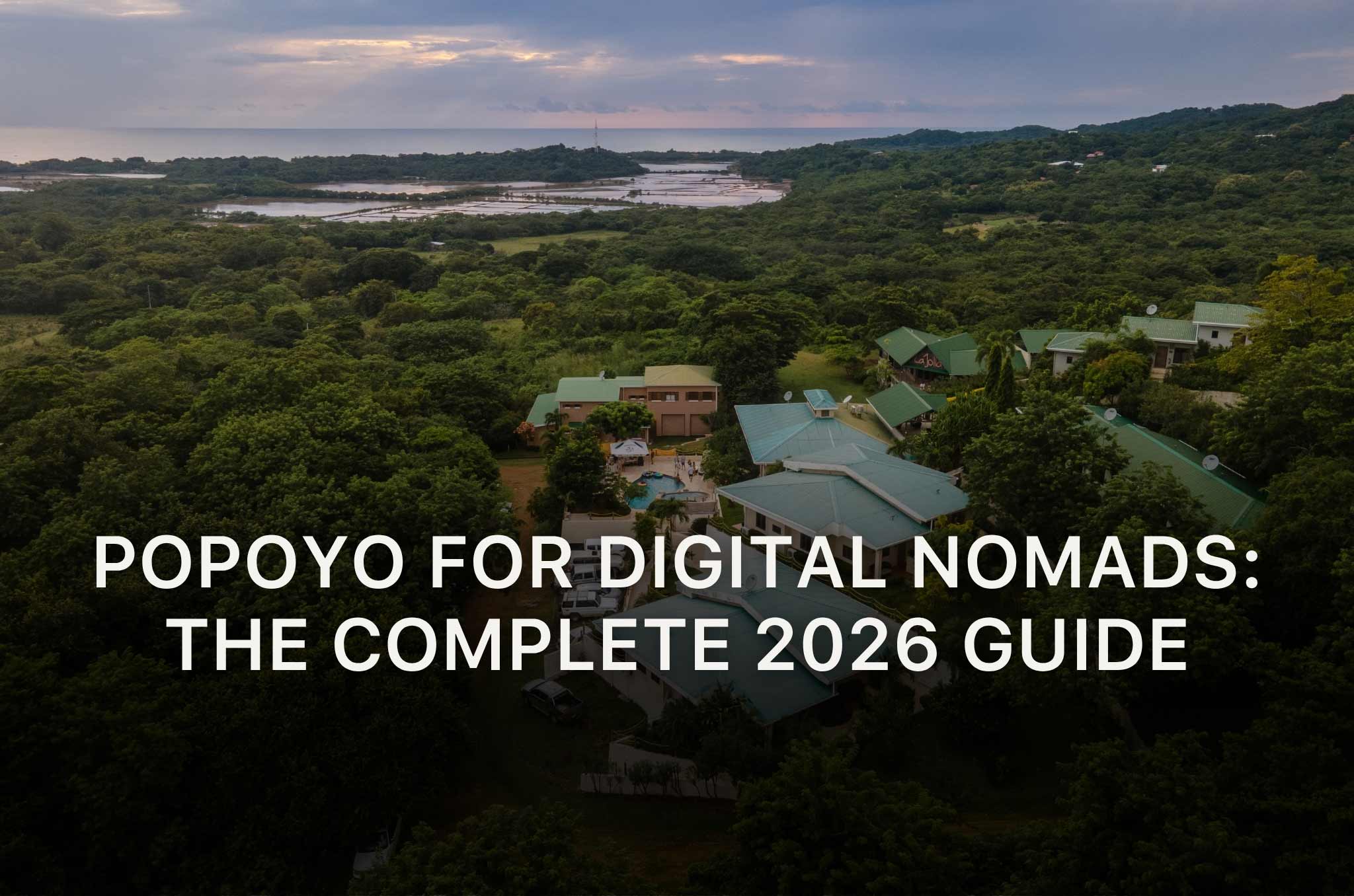
La Jolla sits on the hillside above the coast, ten minutes from Playa Guasacate by road. It is the location of ESC Digital Nomad Village and the most complete remote work infrastructure in the entire Popoyo area.
Rather than sourcing accommodation, coworking, food, transport, and wellness separately across a rural coastal destination, everything at ESC is already in place. The coworking center, the restaurant, the cafe, the gym, the pool, the yoga space, the health clinic, and the commercial plaza are all within the same site. Magnific Rock, the beach resort component of ESC, is ten minutes away by the village’s free community shuttle.
For nomads who do not want to spend their first week solving logistics, this is the relevant option. It is covered in full in the section below.
Internet and Connectivity: What to Realistically Expect
Connectivity is the most discussed topic in any conversation about working remotely in Popoyo, and for good reason. The experience varies significantly depending on where you are and what setup you are using. Here is the honest breakdown.
| Setting | Typical speed | Reliability | Notes |
| Independent residential rental | 5–15 Mbps | Variable | Drops during peak hours; depends on provider |
| Cafes and guesthouses | 5–10 Mbps | Variable | Adequate for basic tasks; unreliable for calls |
| Dedicated coliving (Guasacate area) | Up to 250 Mbps | Generally good | Solar or generator-backed options available |
| ESC Coworking Center, La Jolla | High-speed fiber | Strong and stable | Backup generator; purpose-built workspace |
| Local SIM card (Claro / Movistar) | 4G where available | Usable backup | Coverage can be patchy in lower-lying rural areas |
Independent rentals in Guasacate and Jiquelite typically run on residential connections that are usable for email and standard browsing but are not reliably strong enough for regular video calls or file-heavy work. Speeds tend to drop during peak evening hours and are inconsistent enough that planning around them is not practical.
For professional remote work that cannot tolerate interruptions, a dedicated coworking space is the floor in Popoyo, not an optional extra. The two main dedicated options in the area are the Waves & Wifi facility near Guasacate and ESC’s coworking center at La Jolla. Both run on fiber with power backup, which removes outages as a recurring concern.
A local SIM card from Claro or Movistar provides a functional backup for mobile data when working outside a fixed space. Coverage is adequate in the coastal communities but can become patchy further inland or in lower-lying areas.
What It Costs to Live in Popoyo
Popoyo is significantly more affordable than comparable Pacific surf destinations. The numbers below reflect current market rates across the area.
Daily and monthly expenses
| Category | Typical cost |
| Local restaurant meal | $7 – $10 |
| Cafe coffee or snack | $2 – $5 |
| Weekly grocery shop (cooking at home) | $20 – $40 |
| Coworking day pass | $10 |
| Coworking monthly membership | $150 |
| Scooter rental | $12 – $15 / day |
| Surfboard rental | $10 / day or $200 – $300 / month |
| Surf lesson | $30 – $45 |
| Yoga class | $8 – $12 |
| Airport transfer from Managua | $100 – $120 |
| Border run to Costa Rica (every 90 days) | ~$30 plus transport |
Monthly budget estimates
A self-assembled month, covering a casita rental in Jiquelite, home cooking most days, a monthly coworking membership, and scooter rental, typically runs $1,100 to $1,400. Adding regular restaurant meals, surf lessons, and activities brings that to $1,400 to $1,800.
ESC’s all-inclusive monthly package starts at $2,685 per person for a twin room. That covers accommodation, all meals, unlimited yoga, surf sessions, massage, and full coworking access. For nomads who would otherwise be paying separately for a decent rental, a coworking membership, food, and wellness, the effective gap between the two models narrows considerably once everything is added up.

ESC Digital Nomad Village: The Full Setup
ESC is the most complete remote work infrastructure in the Popoyo area. It is not a hostel with a coworking corner, not a coliving house with shared wifi, and not a surf camp with a desk. It is a purpose-built village across two sites, designed around the specific requirements of people who need to work seriously and also want a lifestyle that justifies being in Nicaragua in the first place.
Explore a full overview of both ESC locations and everything they include.
Two Sites, One Community
La Jolla is the mountain-side base. It houses:
- The ESC Coworking Center: air-conditioned, ergonomic workstations, private meeting rooms for calls, high-speed fiber internet, and a backup generator
- La Jolla Hotel: studio apartments for short to mid-term stays
- El Tigre: an Asian fusion restaurant
- The Grind Cafe: coffee, fresh juices, and healthy food
- An outdoor gym, a yoga space, a pool, and a sauna
- A community garden that supplies produce for the kitchen
- A health and wellbeing clinic
- A small commercial plaza for daily essentials
Magnific Rock is the beach resort, ten minutes away by ESC’s free community shuttle. It sits directly above Playa Guasacate and gives access to the ocean, a pool, daily yoga, and the surf. Playa Popoyo, the area’s main reef break, is directly reachable from here.
The shuttle runs throughout the day in both directions. Moving between the two sites is frictionless, which matters more in practice than it might seem on paper.
What a Working Day Looks Like at ESC
Breakfast at The Grind Cafe or El Tigre. A few hours at the coworking center through the mid-morning: a workspace built for concentration, with the acoustics, the lighting, and the physical separation from living areas that make sustained work possible. Lunch from the kitchen. More work or a yoga class in the early afternoon. The shuttle to Magnific Rock in time for an evening surf at Playa Guasacate or a session at Playa Popoyo before the light drops.
The structure is not imposed, but it is fully available. That distinction matters: having a reliable daily framework around you changes the quality of a working month considerably compared to assembling one piece by piece across different venues in an unfamiliar area.
Packages and Pricing
All packages include accommodation, all meals, unlimited yoga sessions, massage sessions, group surf sessions, and full coworking access.
For people already based in the Popoyo area who want access to the coworking center and community without accommodation, a community membership covers the workspace, pool, events, and shuttle: $10 per day, $40 per week, or $150 per month.
See the full breakdown of what each package includes.
Who ESC Is For
The people who get the most out of ESC tend to have one thing in common: they are done spending energy on setup. Some are professionals who recently went remote and want a structured environment while building their ideal lifestyle. Others are experienced nomads who are tired of rebuilding the same basics in every new country. Couples and colleagues also find value in having a place where both people can work comfortably while still enjoying life beyond the screen.
ESC is not for everyone. If you want total independence, your own kitchen, and no shared spaces, a casita rental in Jiquelite is a better fit. But if you want the Popoyo experience without the overhead of building it from scratch, the village model is worth looking at seriously.
Reach out to the ESC team directly with any questions before you commit.

The Community and Social Life in Popoyo
One of the most consistent themes across every account of living in Popoyo is community. The foreign population here is small enough that you tend to encounter the same people repeatedly. That creates a different social dynamic than a large nomad hub where the faces change every week.
The mix is fairly stable: surfers, remote workers, entrepreneurs, a layer of longer-term expats who came for a season and recalibrated their plans after a few weeks. The shared interest in the ocean gives this community a coherence that is harder to find in urban nomad settings where people arrive with a wider range of agendas.
ESC adds a specific structure to this. Community meals, events, and shared spaces at La Jolla create regular points of contact between residents and members. For nomads arriving alone, this removes the part of landing somewhere new where you spend the first week figuring out who to talk to and where to find them. The connections tend to form faster and go deeper than in places where the community is more diffuse.
Practical Information for Your Stay
Getting to Popoyo: Managua’s international airport is the main entry point into Nicaragua. The drive to the Popoyo area takes approximately two to three hours depending on traffic and road conditions on the day. Airport taxi transfers to the area typically cost $100 to $120. ESC can arrange transfers directly for incoming residents.
Getting around: scooter rental is the standard for local movement, at $12 to $15 per day, negotiable for monthly use. Walking covers most distances within the individual communities. The ESC community shuttle runs between La Jolla and Magnific Rock throughout the day at no additional cost to residents and members. For longer journeys to Rivas or Managua, shared shuttles and private transfers are the practical options.
Cash and banking: Popoyo operates primarily on cash. ATM access in the immediate area is limited. Rivas, approximately 30 to 40 minutes by road, has more reliable ATM coverage. Arriving with a supply of USD is strongly advisable, particularly for your first few days. Confirm your card’s international access with your bank before travel.
Healthcare: ESC has a health and wellbeing clinic on-site at La Jolla for residents. Rivas covers routine consultations and basic care for those based elsewhere in the area. Managua is the destination for anything requiring specialist attention, diagnostic equipment, or hospital facilities.
What to pack: temperatures range from 28°C to 32°C year-round. Lightweight clothing, reef-safe sunscreen, a rash guard for surfing, and any prescription medications are worth prioritizing. Nicaragua uses Type A power outlets, the same as the US and Canada, so no adapter is needed for North American equipment.
Is Popoyo the Right Base for You?
Popoyo suits specific profiles and is clearly not suited to others. The assessment below is honest rather than promotional.
| Popoyo tends to work well if you | It is probably not the right fit if you |
| Are oriented toward surf, ocean, and outdoor lifestyle | Need to be close to a major international airport |
| Want lower costs than comparable Pacific destinations | Require daily access to large-city infrastructure |
| Can plan cash and logistics in advance | Work in a European timezone with early morning overlap |
| Want an existing community rather than building one | Need the nomad hub density of Bali or Chiang Mai |
| Are staying at least two weeks, preferably a month | Are looking for a one-week break rather than a working base |
| Can work through minor infrastructure variability | Cannot tolerate any internet uncertainty outside a fixed coworking space |
The ESC setup removes the most consistent friction points of independent living in Popoyo. For nomads who want the destination without the overhead of assembling it, it is the most direct answer. For nomads who want total independence and are comfortable navigating logistics, a casita rental with a coworking membership covers the essentials at a lower monthly cost.
FAQs About Working Remotely in Popoyo
It depends on where you are working. Independent residential rentals and cafes typically run on connections of 5 to 15 Mbps that can drop during peak hours and are not consistently reliable enough for regular video calls or file-heavy tasks. Dedicated coworking spaces run on fiber with backup power and are the standard for professional use. For any sustained remote work, a coworking membership is the practical baseline. ESC’s coworking center at La Jolla runs on fiber backed by a generator, making it the most reliable connection available in the Popoyo area.How Is the Internet in Popoyo for Remote Work?
A self-assembled month covering a casita rental in Jiquelite, home cooking most days, a monthly coworking membership, and scooter rental typically comes to $1,100 to $1,400. Adding regular restaurant meals, surf lessons, and activities brings that to around $1,400 to $1,800. ESC’s all-inclusive monthly package starts at $2,685 per person for a twin room and covers accommodation, all meals, unlimited yoga, surf sessions, massage, and full coworking access, with no separate daily costs for the core amenities.How Much Does It Cost to Live in Popoyo for a Month?
Most nationalities receive a 90-day tourist visa on arrival in Nicaragua. There is no dedicated digital nomad visa. Nicaragua is part of the CA-4 regional agreement with Honduras, El Salvador, and Guatemala, which means the 90-day clock begins from your first entry into any of the four countries, not from your arrival in Nicaragua specifically. To reset it, you need to exit the CA-4 zone entirely. A border run to Costa Rica is the most common approach and typically costs around $30 plus transport. Temporary and permanent residency options exist for those planning longer commitments.Do I Need a Visa to Work Remotely in Popoyo?
Both seasons are worth considering depending on what you are optimising for. The dry season from November to April brings cleaner skies, offshore morning winds, and the highest concentration of visitors. It is the most social period and the easiest time to land without prior local knowledge. The rainy season from May to October delivers bigger and more powerful surf, a noticeably quieter environment, and a landscape that is visibly more alive. Rain typically arrives as afternoon showers rather than sustained downpours, which leaves mornings and evenings largely unaffected. For nomads who want the best waves and the lowest crowds, the rainy season is genuinely undervalued.What Is the Best Time of Year to Visit Popoyo?