The number of places marketing themselves as remote-work-friendly has grown faster than the infrastructure to back it up. Browsing listicles will give you fifty destinations that look good in photographs. Fewer of them hold up when you actually try to work in them for a month.
This guide covers the ones that do. It includes the established hubs that have earned their reputation, the cities gaining real ground in 2026, and one destination in Central America that most nomads have not considered yet but probably should. The criteria are the same for all of them.
What Makes a Destination Worth Staying in (Not Just Visiting)
Arriving somewhere feels different from living there. A great first week does not always translate into a productive month. The question is not whether a place is beautiful or interesting, it is whether you can maintain your output, your health, and your energy for weeks on end.
Six factors consistently determine the answer:
- Internet reliability: not just speed, but consistency. A 40 Mbps connection that holds all day is more useful than a 100 Mbps one that drops during calls. Backup power coverage matters significantly in destinations outside major cities.
- Cost of living: total monthly spend, not rent alone. Food, coworking access, transport, and daily activities compound quickly.
- Visa access: how long you can legally stay, and whether extending is realistic without disrupting your routine.
- Workspace quality: coffee shops work for a day. A month requires ergonomic seating, consistent lighting, and somewhere private to take a video call.
- Community: proximity to other remote workers changes your energy level, your conversations, and often your output. Isolated remote work is harder to sustain than most people expect before they try it.
- Life outside work hours: what you do at 6pm shapes how you show up at 9am. A destination that offers nothing you actually want to do is genuinely harder to sustain than one with a beach, a gym, or a social scene worth participating in.
The Established Hubs That Still Deliver in 2026
These five destinations have been tested by tens of thousands of remote workers over several years. None of them is ideal for everyone, and each has real trade-offs worth naming. But all of them have built infrastructure that works.
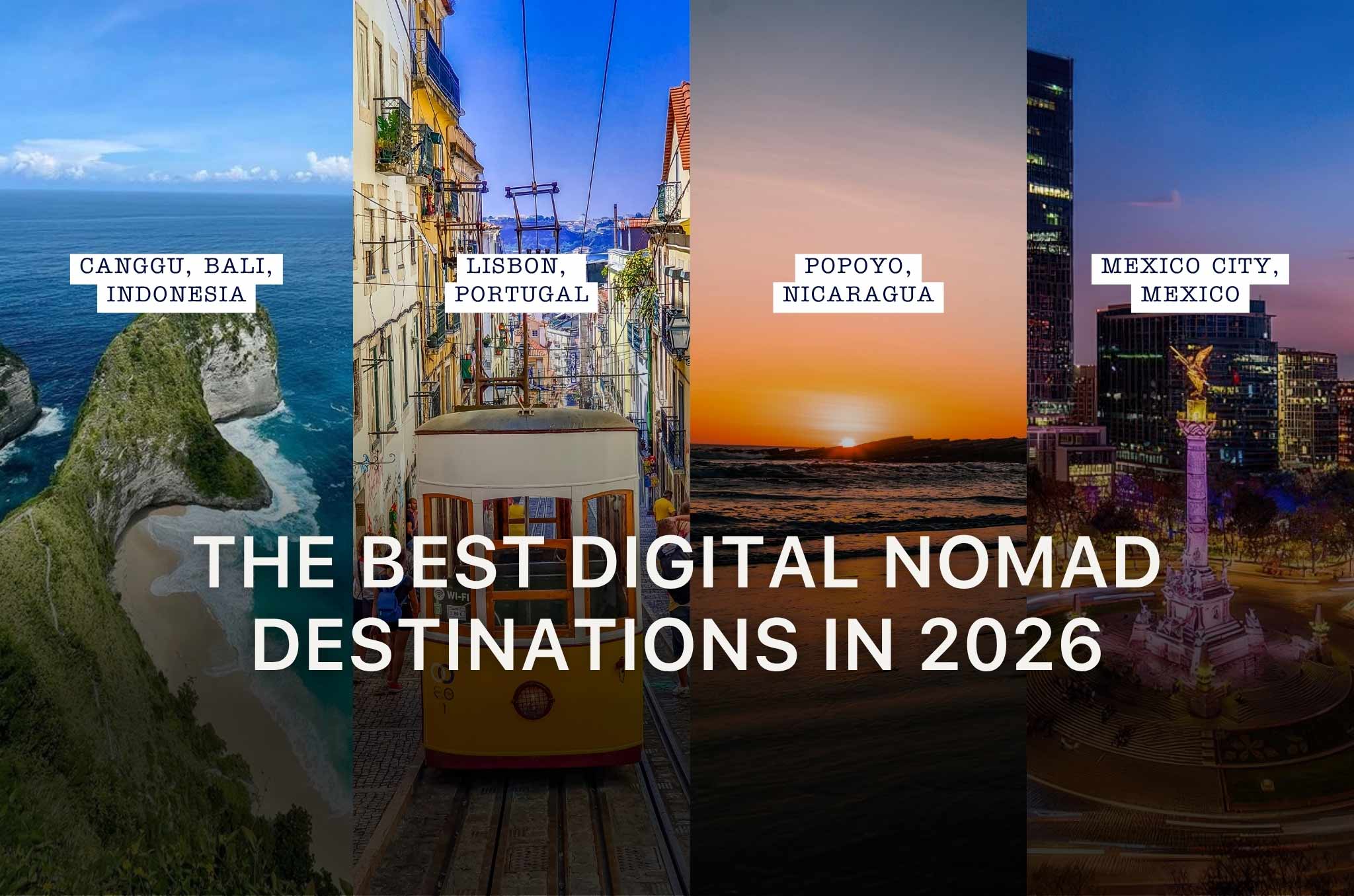
Canggu, Bali, Indonesia
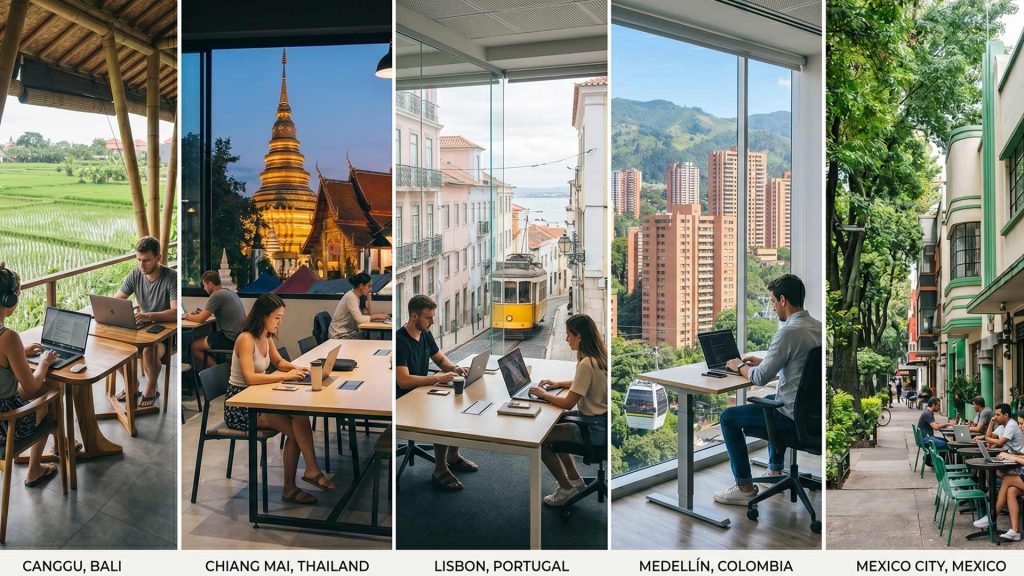
The density of coworking spaces, cafes with fast Wi-Fi, and coliving options in Canggu is difficult to match anywhere else. Setup time is short: you can arrive and be functional within a day. The social scene is active and international, which makes meeting people easy from the start.
Costs have risen noticeably since 2022. Villas that rented for $600 a month three years ago now list at $900 to $1,200. Visa logistics require planning: the standard tourist visa covers 30 to 60 days and requires either an extension or a border run. Internet is generally solid in dedicated coworking spaces, though residential connectivity varies by neighborhood.
Chiang Mai, Thailand
Chiang Mai normalized the digital nomad lifestyle for many people and has spent over a decade building infrastructure to match: stable internet, hundreds of coworking spaces, exceptional food at low prices, and a monthly cost of living that rarely exceeds $1,500 for a comfortable setup.
The main limitation is social depth. The nomad population turns over quickly, which makes it easy to meet people but harder to build lasting connections. Thailand’s long-term resident visa program has made extended stays more viable for those who qualify. For first-time nomads who want a soft landing with maximum support, Chiang Mai remains one of the most practical starting points available.
Lisbon, Portugal
Lisbon offers something most destinations in Southeast Asia or Latin America cannot: a European timezone that works simultaneously for clients in both Europe and the US East Coast. Combined with strong coworking infrastructure, a functional international airport, and a city that is genuinely pleasant to live in, that timezone alignment makes Lisbon particularly valuable for nomads with European professional ties.
The cost of living has risen sharply. Central neighborhoods now carry rent prices that rival mid-tier Western European capitals. Those on tighter budgets often find better value in Porto or along the Algarve coast, both of which offer similar timezone benefits at lower cost. Portugal’s digital nomad visa allows stays of up to one year and remains one of the most accessible in Europe for non-EU citizens.
Medellín, Colombia
Medellín rewards patience. The first week is orientation. By the second, you have a coworking space, a neighborhood cafe, and a daily rhythm. El Poblado is the most developed area for remote workers, with coworking options, coliving spaces, and restaurants concentrated in a walkable district. The climate sits at around 22°C year-round, which makes it comfortable in a way that few tropical destinations can claim.
Total monthly costs for a comfortable setup fall between $1,200 and $1,800 depending on accommodation and lifestyle choices. Internet in dedicated coworking facilities is fast and reliable. Residential connectivity can be more variable. Colombia’s digital nomad visa permits stays of up to two years for those who qualify, making Medellín one of the more viable long-term bases in the region.
Mexico City, Mexico
Mexico City operates on a different scale from every other destination on this list. The food scene alone justifies a stay. Coworking infrastructure is dense, the creative and startup communities are active, and the timezone aligns well with US teams, which is a genuine daily advantage for anyone working with North American clients.
The city takes time to navigate. Its scale can be disorienting in the early weeks, and logistics require more planning than in a smaller base. For nomads who thrive on urban density, value cultural richness alongside productivity, and want easy access to varied day trips, few cities deliver more consistently.
One Destination Most Nomads Are Sleeping On
Before moving on, one more deserves a mention: Popoyo, on Nicaragua’s Pacific coast.
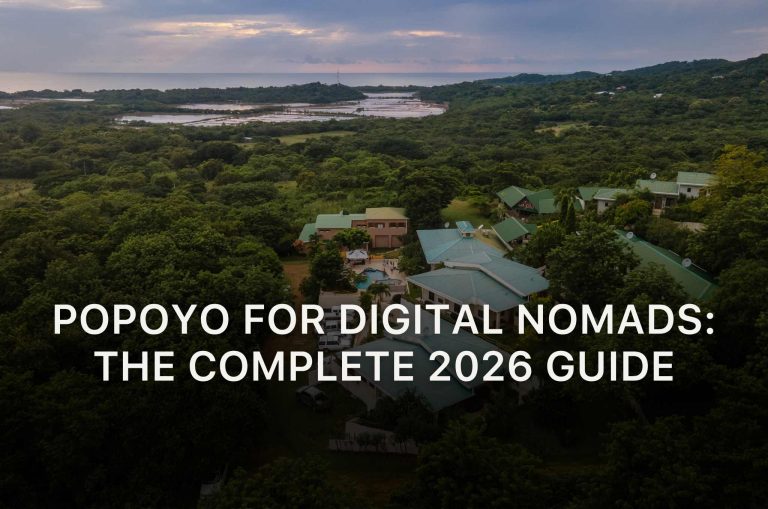
It does not fit the profile of anything above. It is not an urban hub with a dense coworking scene or a neighborhood of laptop-friendly coffee shops. It is a purpose-built digital nomad village on one of Central America’s most consistent surf coasts, where the infrastructure most people spend months trying to assemble elsewhere is already in place on arrival.
Central America rarely appears on these lists. That is exactly why it is worth looking at. The full picture is below.
The Destinations Gaining Ground in 2026
These five destinations have crossed a threshold. They are no longer experiments. They have the internet infrastructure, the cost profile, and the critical mass of remote workers to function as real bases, not novelty stops.
| Destination | Region | Est. monthly cost | Internet quality | Best for |
| Tbilisi, Georgia | Caucasus | $800–$1,200 | Strong, reliable | Long stays, culture, minimal visa friction |
| Bansko, Bulgaria | Eastern Europe | $700–$1,100 | Excellent, fiber available | Mountain lifestyle, EU timezone |
| Da Nang, Vietnam | Southeast Asia | $700–$1,000 | Good and improving | Beach access, low cost, city infrastructure |
| Tirana, Albania | Southeast Europe | $600–$900 | Solid | Budget-focused, EU proximity |
| Popoyo, Nicaragua | Central America | From $2,685/mo all-inclusive | Fiber + backup generator | Surf, structured community living |
Tbilisi has one of the most generous long-stay policies in the world: most nationalities can remain for up to a year without any special visa application. The city combines low costs, a growing creative community, and a setting that keeps people there considerably longer than they planned.
Bansko has quietly built one of Europe’s most concentrated nomad communities. Its coworking spaces draw a consistent crowd of serious remote workers, and the mountain setting creates a lifestyle layer that extends well beyond the laptop. Costs remain low relative to Western Europe, and the community is cohesive enough that you can meet the same people reliably from week to week.
Da Nang offers what many beach destinations do not: a functioning city with hospitals, supermarkets, and real transport infrastructure alongside the ocean. Internet quality has improved markedly in the past two years. It is quieter than Hoi An and considerably less overwhelming than Hanoi.
Tirana is the most nascent on the list. Coworking infrastructure is still developing, but the cost floor is the lowest in Europe and the city’s momentum is accelerating. For nomads willing to be part of building a scene rather than inheriting one, it has real upside.
Popoyo operates on an entirely different model. Rather than renting independently and sourcing coworking, food, and wellness separately, ESC Digital Nomad Village bundles everything into all-inclusive packages. The monthly cost reflects that structure: it covers accommodation, all meals, coworking, yoga, surf sessions, and massage. The section below breaks down what that looks like in practice.
Popoyo, Nicaragua: A Different Kind of Base
Most destinations ask you to build your own setup from scratch. You arrive, find a place to stay, locate a coworking space, figure out where to eat, work out where to exercise. That process takes at least a week, and if you are only staying a month, it consumes a meaningful percentage of your time there.
ESC Digital Nomad Village is built on a different premise.
The Pacific Coast Most Nomads Haven’t Considered Yet
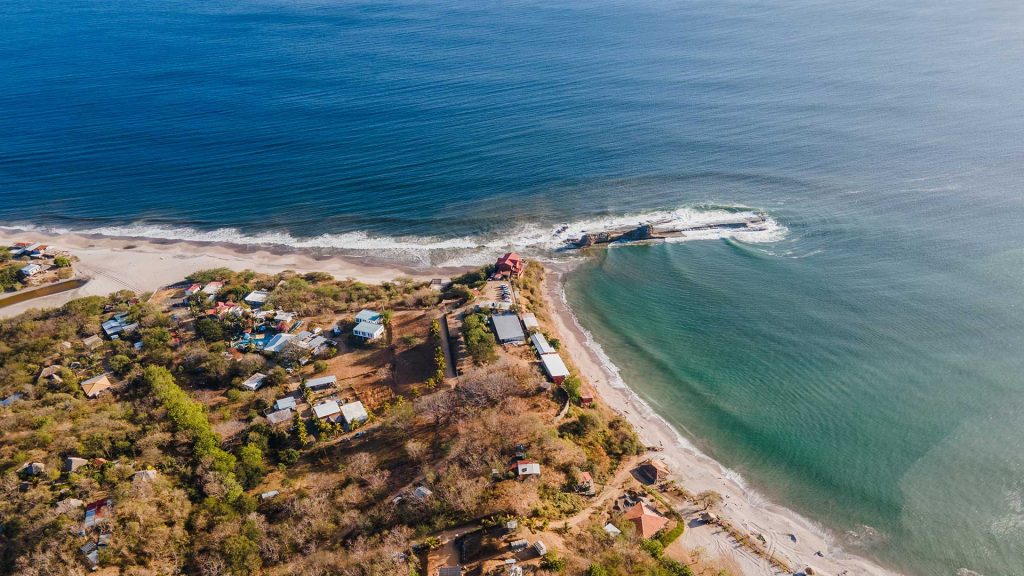
Nicaragua’s Emerald Coast sits in the Tola region of the Rivas department, facing the Pacific. The landscape is defined by green volcanic hills, consistent ocean swells, and a coastline that has not yet been shaped by mass tourism. Playa Guasacate and Playa Popoyo are two of Central America’s most reliable surf breaks, drawing committed surfers year-round.
The nearest larger town is Rivas, accessible by road and well-stocked for daily needs. Managua’s international airport is the main entry point. The area is quieter and less developed than San Juan del Sur or Granada, which are the more commonly visited destinations in the south of the country. That relative undiscovery is visible in the pace of daily life and in what has not yet been built there.
The Infrastructure, Day to Day
ESC’s coworking center sits at La Jolla, the village’s mountain-side base. The space is air-conditioned, equipped with ergonomic workstations and private meeting rooms, and runs on high-speed fiber internet. A backup generator covers any power interruptions, which matters considerably more in a rural coastal setting than in a city with redundant grid infrastructure.
The workspace is designed for eight-hour working days, not two-hour laptop sessions. That distinction shapes everything: the furniture, the acoustics, the meeting room setup, the separation between work and living areas.
Two Locations, One Community
ESC runs across two sites, ten minutes apart by the village’s free community shuttle.
La Jolla is the operational base. It houses the coworking center, a hotel with studio apartments, El Tigre (an Asian fusion restaurant), The Grind Cafe for coffee and fresh juices, an outdoor gym, a yoga space, a pool, a sauna, a community garden that supplies produce for the kitchen, a health and wellbeing clinic, and a small commercial plaza for daily necessities.
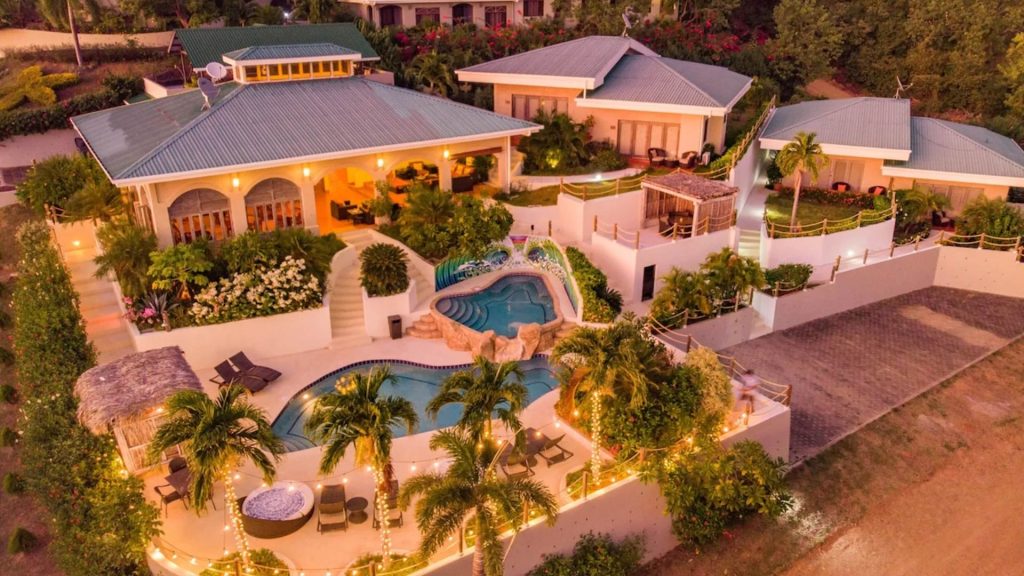
Magnific Rock is the beach resort, located directly above Playa Guasacate. It offers pool access, daily yoga sessions, surf access, and the slower rhythm that comes with being steps from the ocean.
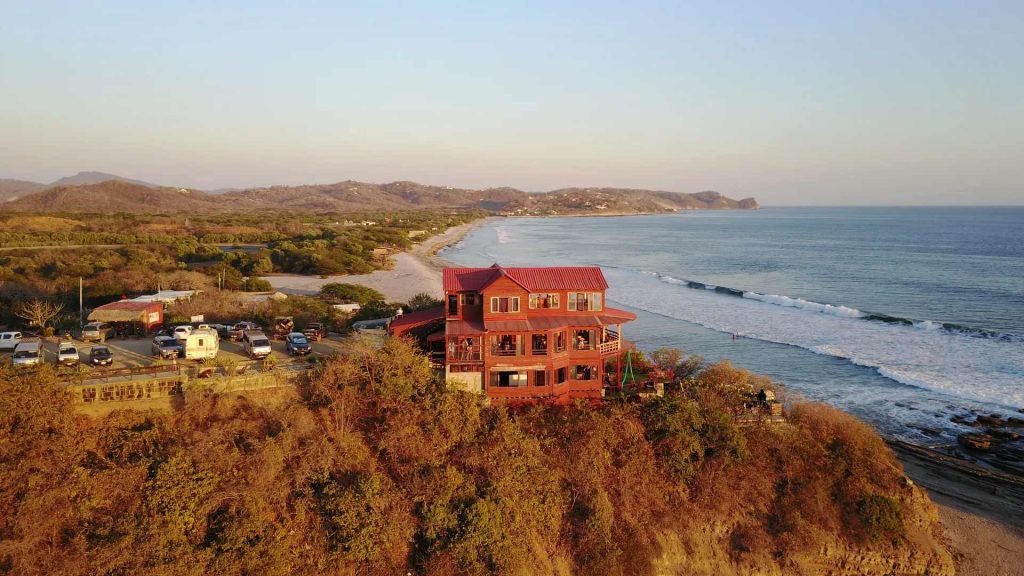
The shuttle makes moving between the two simple. A typical day can start with a productive morning at the coworking center and finish at the beach in time for a late-afternoon surf or yoga class. The two sites feel different, but they function as one community. Explore everything ESC includes across both locations.
What It Costs and What It Includes
All-inclusive packages cover accommodation, all meals, unlimited yoga, massage sessions, group surf sessions, and full coworking access. There are no separate charges for the core amenities.
| Package | Private room | Twin room (per person) |
| 1 week | $1,075 | $795 |
| 2 weeks | $1,990 | $1,510 |
| Monthly | $3,375 | $2,685 |
For those already based in the Popoyo area, a community membership gives access to the coworking center, pool, events, and the shuttle: $10 per day, $40 per week, or $150 per month.
See the full details of each package and what is included.
Who Tends to Come Here
The people who get the most out of ESC tend to share a specific frustration: they are good at their work, but the environments they have been working in are not supporting them. Some are professionals who went remote and found that apartments and airport lounges are a poor substitute for a structured, social setting. Some are experienced nomads who are tired of reassembling the same basic setup in every new city. Some are couples or duos who want to combine genuine productivity with a place worth actually being.
ESC is not a party destination and not a silent retreat. It is a place where people work seriously and also surf, do yoga, eat well, and have real conversations. Those two things are not in tension here.
If what you have read sounds like the kind of setup you have been looking for, reaching out directly or exploring the current offers is the most straightforward next step.
How to Match a Destination to How You Actually Work
The right base depends on three things: how you work best, what your monthly budget allows, and how much environmental structure you need to be productive.
| If this describes you | Worth considering |
| You need EU or US timezone overlap with frequent flight options | Lisbon, Mexico City, Medellín |
| You want the lowest cost of living with established infrastructure | Chiang Mai, Bansko, Tirana |
| You prioritize beach access and Southeast Asian affordability | Da Nang, Canggu |
| You want everything included: workspace, meals, wellness, community | ESC, Popoyo |
| You are new to remote work and want structure from day one | ESC’s weekly package, or Chiang Mai |
| You want a longer European stay with visa clarity | Lisbon, Tbilisi, Bansko |
If you are unsure, start shorter than you think you need. Most destinations on this list can be meaningfully tested in two weeks. ESC’s weekly and two-week packages are built specifically for that kind of exploratory stay, structured enough to give you a real read on whether the environment works for you.
Questions Worth Answering Before You Book
Not in every case. Many countries allow 30 to 90 days visa-free for common passport holders, which covers most short to medium stays without any paperwork. For stays beyond three months, a dedicated digital nomad visa is usually the cleaner option. Portugal, Colombia, Georgia, Albania, and Thailand all have established programs with published income requirements and defined application processes. Nicaragua offers a 90-day tourist visa for most nationalities, which can be renewed in-country.Do I Need a Digital Nomad Visa to Work Remotely Abroad?
For most remote work, 25 Mbps is a functional floor. Video calls, document collaboration, and email all work reliably at that speed. If you regularly upload large files, run multiple simultaneous calls, or work in video or design, 50 to 100 Mbps is a more realistic target. More important than the headline figure is consistency: a 30 Mbps connection that holds steady all day is more useful than a 100 Mbps one that drops mid-call. If you are considering a destination outside a major city, ask specifically about backup power coverage before you commit.What Internet Speeds Do I Actually Need for Remote Work?
It depends on what you are optimizing for. An independent apartment typically costs less per month for longer stays and gives you more privacy. A coliving or all-inclusive setup removes setup friction and gives you a social environment from the moment you arrive. For a first stay in a new country or region, the structure of a managed environment tends to pay for itself in time saved and energy preserved. Once you have direct experience of a place, renting independently becomes a more informed and practical decision.Is It Better to Book a Coliving Space or Rent My Own Apartment?
The most consistent answer from nomads with more than a year of experience is: at least a month. Two weeks is enough to orient yourself. A month is enough to build a real working routine, get meaningful output done, and make an honest assessment of whether the place suits you. Stays shorter than two weeks tend to feel more like extended tourism than a genuine working base. If a weekly or two-week package is available at your destination, use it as a trial. Then extend if it delivers.How Long Should I Stay in One Place as a Digital Nomad?